

Cloud Architecture

Cloud Migration
DevOps Automation
CI/CD Pipelines
Infrastructure as Code
Cloud Security & Compliance
AWS • Azure • GCP
Hybrid & Multi-Cloud
Monitoring & Optimization
Disaster Recovery
Cloud Architecture
Cloud Migration & Modernization
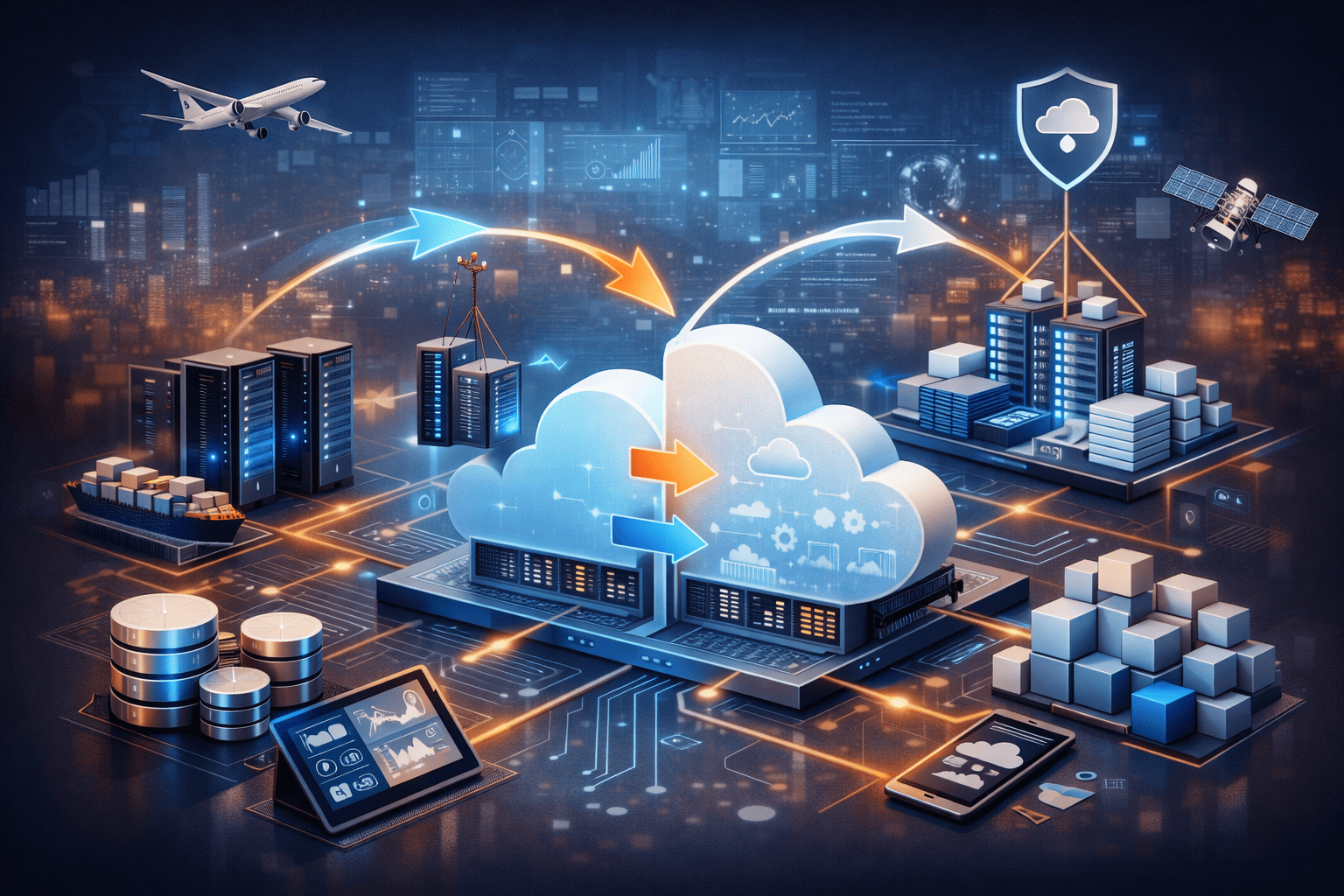
Cloud Migration & Modernization enables organizations to move existing applications, data, and workloads to the cloud while transforming legacy systems into agile, cloud-native solutions. A well-planned migration and modernization strategy reduces risk, minimizes downtime, and ensures that businesses fully benefit from the scalability, flexibility, and innovation offered by cloud platforms.
Assessment and Migration Strategy
Successful cloud migration begins with a detailed assessment of existing infrastructure, applications, and dependencies. This phase helps identify the right migration approach—rehost, replatform, refactor, or rebuild—based on business priorities, performance needs, and cost considerations. A clear roadmap ensures smooth transitions with minimal disruption to ongoing operations.
Seamless and Secure Migration
During migration, security, data integrity, and continuity are top priorities. Workloads are moved using proven tools and best practices to ensure minimal downtime and reliable performance. Secure connectivity, data encryption, and validation processes ensure that applications and data remain protected throughout the migration journey.
Application Modernization
Modernization goes beyond moving workloads to the cloud. It involves transforming legacy applications to take advantage of cloud-native capabilities such as microservices, containers, managed databases, and serverless computing. This improves scalability, performance, and resilience while reducing operational complexity and technical debt.
Performance Optimization and Scalability
Modernized cloud workloads are designed to scale dynamically based on demand. By leveraging auto-scaling, load balancing, and optimized resource allocation, organizations can deliver consistent performance while controlling costs. Continuous performance tuning ensures applications remain responsive as usage patterns evolve.
Operational Efficiency and Automation
Cloud migration and modernization introduce automation through Infrastructure as Code, CI/CD pipelines, and monitoring tools. These practices streamline deployments, improve reliability, and enable faster updates. Automated operations reduce manual effort, lower error rates, and support continuous improvement.
Ongoing Optimization and Innovation
Cloud migration is not the end—it is the beginning of continuous optimization. Regular reviews, cost management, and architectural enhancements ensure that cloud environments remain efficient and aligned with business goals. By modernizing applications and infrastructure, organizations gain the agility to innovate faster, adopt new technologies, and stay competitive in a rapidly evolving digital landscape.